One controlled university evaluation, three seasons of commercial strawberry production, and a public demonstration harvest. The numbers below are the ones we can stand behind — with their sources attached.
16-page evaluationK3 Field · 97-day season · May 2026
The University of Arizona report
Not our words. Theirs.
"The University of Arizona field evaluation showed that Vorterra increased iceberg lettuce yield, improved irrigation conservation, and maintained performance under reduced nitrogen input… Vorterra increased yield by 6.8% to 20.5% across corresponding treatments."
Conclusions — Section 8 of the evaluation reportAli Mohammed, Ph.D. · Assistant Professor & Extension Specialist School of Plant Sciences, University of Arizona · May 3, 2026
8 treatments, factorial97 day seasonSDI drip, sensor-scheduled100% of water through the unit
Inside the data
Every treatment pair moved the same direction.
Eight treatments in a factorial arrangement — irrigation rate (100% and 75% of the full irrigation threshold), nitrogen (full vs. reduced, −27%), and Vorterra (with or without) — on iceberg lettuce under subsurface drip, scheduled by Irrometer Watermark and Sentek Drill-and-Drop sensors. Planted December 17, 2025; harvested March 24, 2026.
Fresh yield · tons per acre
Without VorterraWith Vorterra
Every pair moved up.
Season total 51.8 → 58.3 t/ac · +12.5% across all treatments combinedTable 6, University of Arizona evaluation report
Water productivity · crop per acre-inch of water
Positive in all four corners.
Full irrigation75% irrigationFull nitrogen
+23.1%1.549 vs 1.258 t/ac-in — the trial's headline gain
+6.7%still positive under deficit irrigation
Reduced nitrogen (−27%)
+15.7%fertilizer cut by a quarter, efficiency still up
+7.9%positive under combined water & nitrogen stress
The pattern is the point: cut the water, cut the fertilizer, or both — the unit's gain never went negative.Table 7 of the report · bars scaled to the largest gain
View the full data table
Treatment
Without unit
With unit
Change
100% FIT + full N
15.1 t/ac
18.2 t/ac
+20.5%
75% FIT + full N
13.2 t/ac
14.1 t/ac
+6.8%
100% FIT + reduced N
12.1 t/ac
13.7 t/ac
+13.2%
75% FIT + reduced N
11.4 t/ac
12.3 t/ac
+7.9%
Overall combined
51.8 t/ac
58.3 t/ac
+12.5%
Fresh yield by corresponding treatment pair, Table 6 of the report. Every pair improved with the unit inline.
WATER PRODUCTIVITY · 100% FIT, FULL N
+23.1%
1.549 vs 1.258 tons per acre-inch — the trial's headline efficiency gain.
100% FIT, REDUCED N
+15.7%
Water productivity gain with nitrogen cut by roughly a quarter.
75% FIT, FULL N
+6.7%
Still positive under deficit irrigation.
75% FIT, REDUCED N
+7.9%
Positive under combined water and nitrogen stress.
The finding operators care about most
Soil-moisture sensors showed Vorterra plots under both scheduled 100% irrigation regimes skipped one irrigation event during the season and still out-yielded controls — the report attributes this to improved retention of plant-available water in the root zone. Its first recommendation: pair the unit with real-time soil-moisture monitoring so skips are confirmed by sensor data, never by the calendar.
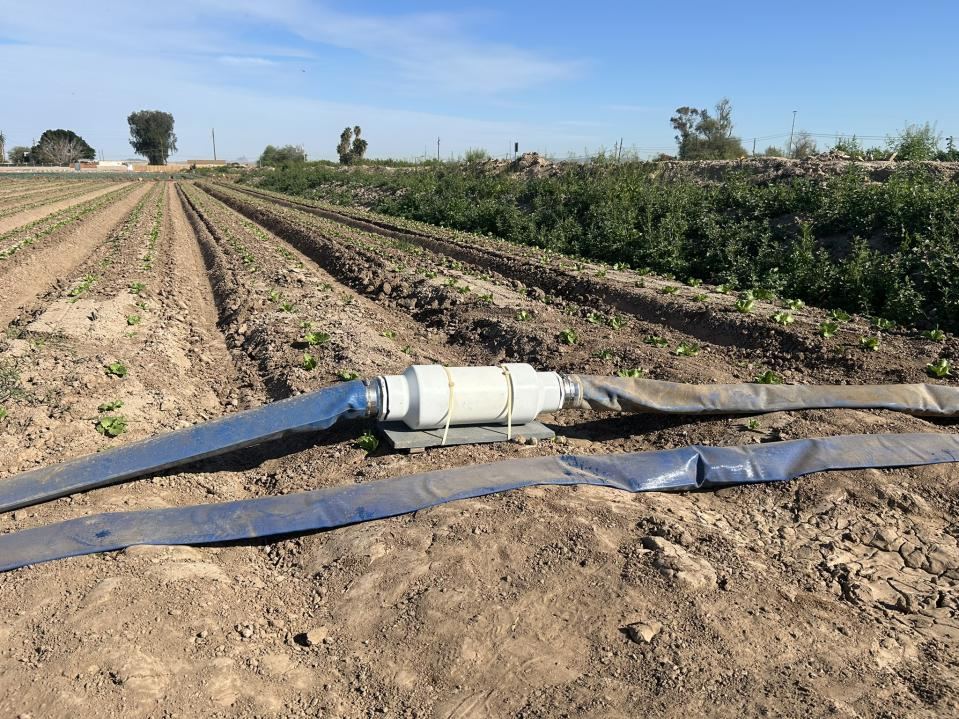
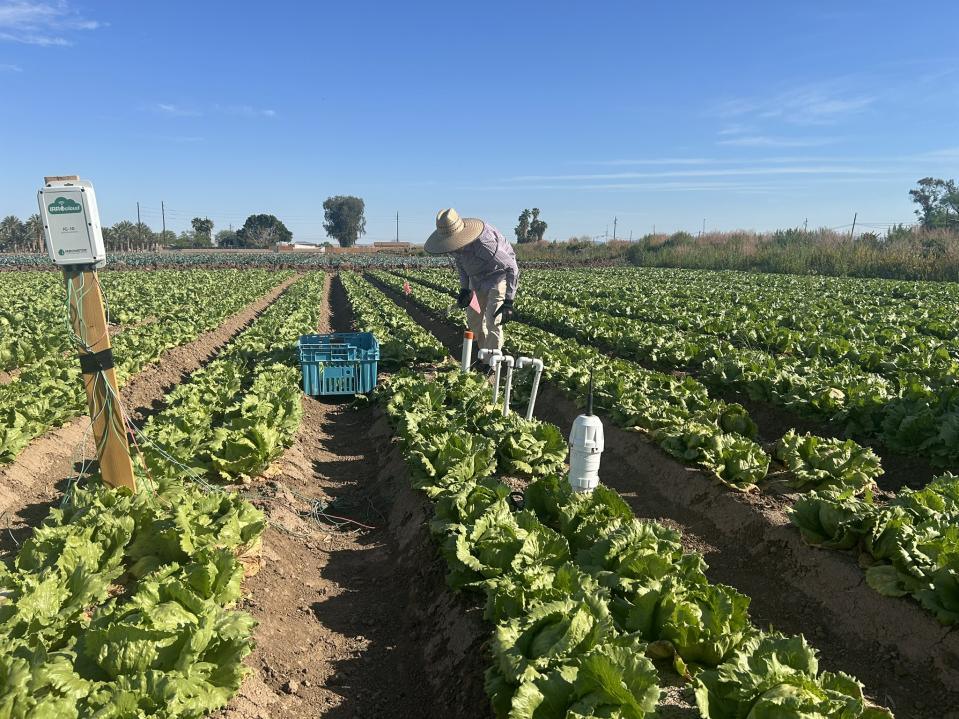
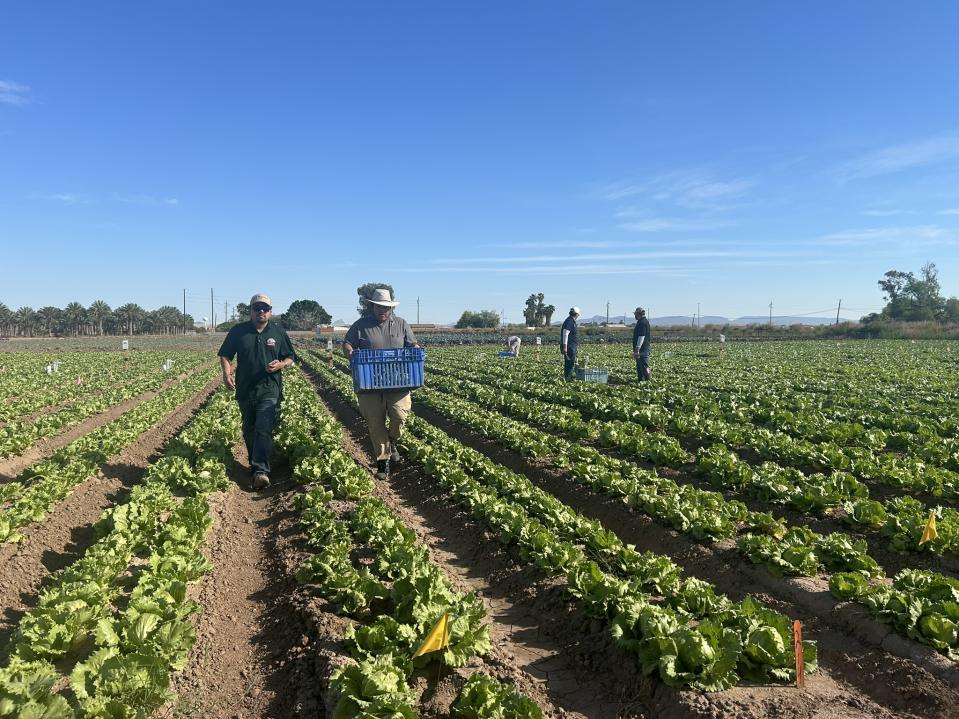
The unit on the line. Installed inline at K3 Field — all irrigation water passed through it. (Report, Fig. 2)Sensor-scheduled. Irrometer and Sentek instruments among the rows at harvest stage. (Fig. 7)Harvest, March 24, 2026. The research team collecting heads for fresh-weight measurement. (Fig. 8)
A remarkable technology I intend to expand across my operations.
A.G. KawamuraFormer California Secretary of Food & Agriculture · Former Chairman, Western Growers Third-generation grower-shipper, Orange County Produce & Gem-Pack Berries
3
consecutive strawberry seasons on Vorterra
10–20%
season-over-season yield gains reported
Reclaimed
tertiary-treated municipal water throughout
Field visit
The ground good enough to show the Secretary.
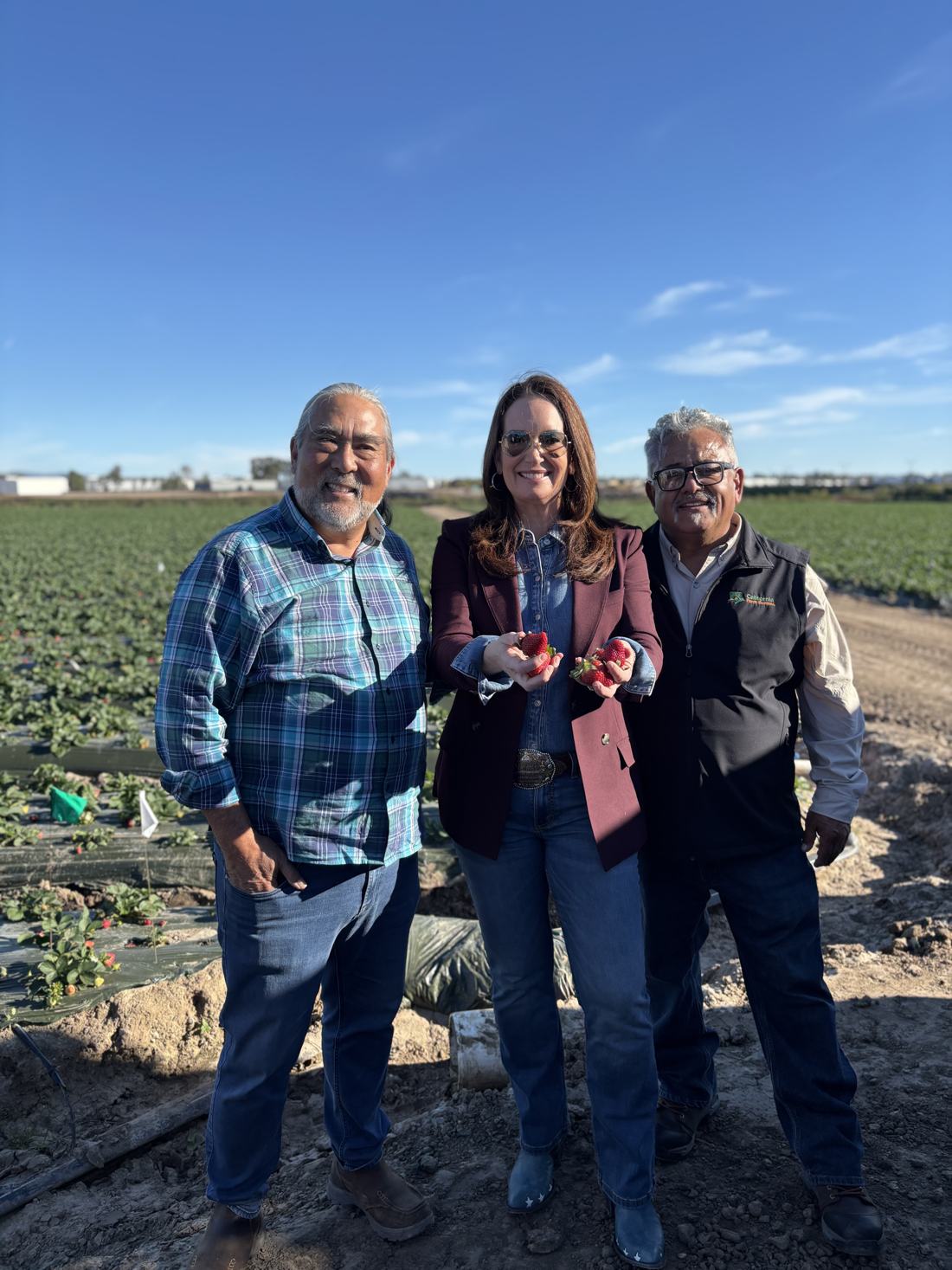
When U.S. Secretary of Agriculture Brooke L. Rollins visited Orange County strawberry country, this is the operation she was walked through — the same commercial program that has run Vorterra for three consecutive seasons on reclaimed municipal water, hosted by A.G. Kawamura with Mark Lopez, President of the Orange County Farm Bureau. The strawberries in her hands came off these rows.
Photograph reproduced as documentary record of a field visit. The presence of any public official is not an endorsement: no federal or state agency, and no serving official, has endorsed Vorterra or its products. Secretary Rollins is identified by title as the 33rd U.S. Secretary of Agriculture.
On the ground it was grown on. A.G. Kawamura and Mark Lopez with Secretary Rollins in the Vorterra-equipped strawberry field.
Yield figures are grower-reported from commercial production and are not controlled-trial results; the controlled data on this page is the University of Arizona Yuma evaluation. Kawamura is a customer who ran the technology on his own ground for three seasons — not a spokesperson.
Public demonstration · 2026
177,796 lbs from an acre and a half.
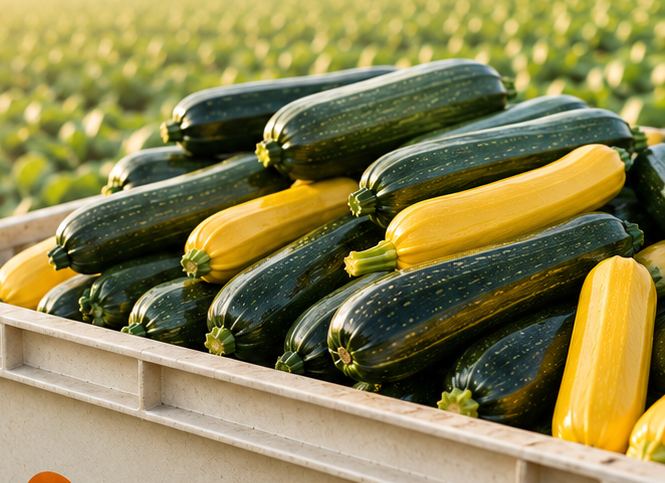
A summer-squash demonstration block grown with University of California Agriculture & Natural Resources, directed by A.G. Kawamura — with the entire harvest donated to Second Harvest Food Bank of Orange County. A demonstration, not a controlled trial — but one anyone could walk.
UC ANR hosted1.5 acres100% of harvest donated
Second Harvest Food Bank
Grown to give away.
The demonstration block's full harvest went to food-bank distribution across Orange County.
Deployments
Who is already running these units.
Gem-Pack Berries
Strawberries — one of the largest strawberry growers in the United States, and the anchor commercial deployment.
Prime Time International
Peppers at commercial scale — the largest pepper grower in the world.
The Ecology Center
A working regenerative farm and education centre, paired with sensor-based monitoring.
Alfarm
Live on the Water-as-a-Service model — billing monthly under contract.
Your ground next
The next result on this page could be yours.
Deployment starts with one block — against your own control, with your own meter.